Basic Information
| Field | Detail |
|---|---|
| Full name | Margaretha (Margarethe, Margareta) Luther |
| Also known as | Margaretha von Künheim |
| Birth | 17 December 1534, Wittenberg |
| Death | 1570, East Prussia (dates and places reported vary, often 3 March and locales such as Mohrungen or Mühlhausen) |
| Parents | Martin Luther and Katharina von Bora |
| Siblings | Johannes Hans Luther, Elisabeth Luther, Magdalena Luther, Martin Luther the Younger, Paul Luther |
| Spouse | Georg von Künheim, married 5 August 1555 in Wittenberg |
| Children | Several, commonly including Margareta von Künheim born circa 1559 and Anna von Künheim born circa 1563, with others recorded in family registers |
| Notability | Youngest child of the Reformer, wife of a Prussian nobleman, subject of a portrait attributed to Lucas Cranach the Younger |
| Role | Noblewoman, household manager, anchor of a line that linked the Luther family to East Prussian gentry |
| Associated places | Wittenberg, East Prussia |
A Life in the Afterglow of the Reformation
Margaretha Luther was born at Wittenberg on December 17, 1534, the youngest child in a Reformation-centered household. Discussion and guests filled her father’s study and table. Brewing, bookkeeping, and caring were constants in her mother’s yard and kitchen. Margaretha became a young woman while Europe fought for new religious and political forms.
She went from a reformer’s home to a Prussian estate. She married Georg von Künheim, an East Prussian nobleman, in August 1555 and entered a world of land, lineage, and provincial courts. Her legacy was half household memory and half public myth when her parents died. In her thirties, she died in 1570, remembered by relatives and painters.
Parents, Siblings, and the Wittenberg Household
The Luthers blended scholarship with rigorous administration. Luther taught, wrote, and advised princes. Katharina von Bora bought land, lent money, managed workers, and maintained a large home. The children were reared amid students, pastors, and visiting dignitaries.
- Johannes Hans, the eldest, became the standard bearer for the next generation.
- Elisabeth died in infancy, a wound the family carried quietly.
- Magdalena died at age 13, and her father’s grief is one of the most intimate passages in Reformation letters.
- Martin the Younger and Paul reached adulthood, Paul becoming a physician.
- Margaretha remained the last born, the one whose life would reach farthest east.
Family Snapshot
| Person | Life dates | Relationship to Margaretha | Notes |
|---|---|---|---|
| Martin Luther | 1483 to 1546 | Father | Reformer whose writings reshaped European Christianity |
| Katharina von Bora | circa 1499 to 1552 | Mother | Former nun turned estate manager and entrepreneur |
| Johannes Hans Luther | 1526 to after 1570 | Brother | Eldest son, pursued education and office |
| Elisabeth Luther | 1527 to 1528 | Sister | Died in infancy |
| Magdalena Luther | 1529 to 1542 | Sister | Died at 13, memorialized in family letters |
| Martin Luther the Younger | 1531 to 1565 | Brother | Survived to adulthood |
| Paul Luther | 1533 to 1593 | Brother | Physician and academic figure |
Marriage into the Künheim Line
On 5 August 1555, Margaretha married Georg von Künheim in Wittenberg. The match tied one of Germany’s most talked households to East Prussian royalty. The Künheim family owned estates and responsibilities that rooted them in regional networks of power. For Margaretha, marriage meant a shift from university town rhythms to the seasonal, ceremonial, and managerial duties of a manor.
Georg outlived Margaretha by 40 years, born July 1532 and dying October 1611. Noble widowers with holdings and lineages usually remarried after her death. Margaretha gave the Künheim house a unique connection to the Reformer.
Children and Descendants
Margaretha and Georg had many children in the late 1550s and early 1560s, according to records. Two girls are most often cited. Margareta and Anna von Künheim, both between 1559 and 1563. The names and years of additional children in family registries differ by compiler.
These offspring connected Margaretha to other East Prussian families. Many descendants bear the von Saucken name. The Luther legacy moved from Wittenberg’s lecture halls to frontier estates and churches with each marriage. It grew more private yet entrenched in regional memory.
Household, Finances, and Daily Work
Margaretha’s notebooks and account books are lost. The sixteenth-century function of noblewomen better explains her finances. She brought a dowry to a house that balanced rentals, harvests, and service. The tasks were big. Producing or buying food and linens was necessary. Outbuildings needed upkeep. Hired and compensated staff were needed. Estates needed management and diplomacy.
In this economy, achievement looked like stability. It looked like fulsome pantries, orderly storerooms, and reliable tenants. It looked like healthy children and well managed alliances. Such things rarely leave a poet’s trace. Yet in a manor ledger or a baptized infant’s name, they become history.
A Portrait Attributed to Lucas Cranach the Younger
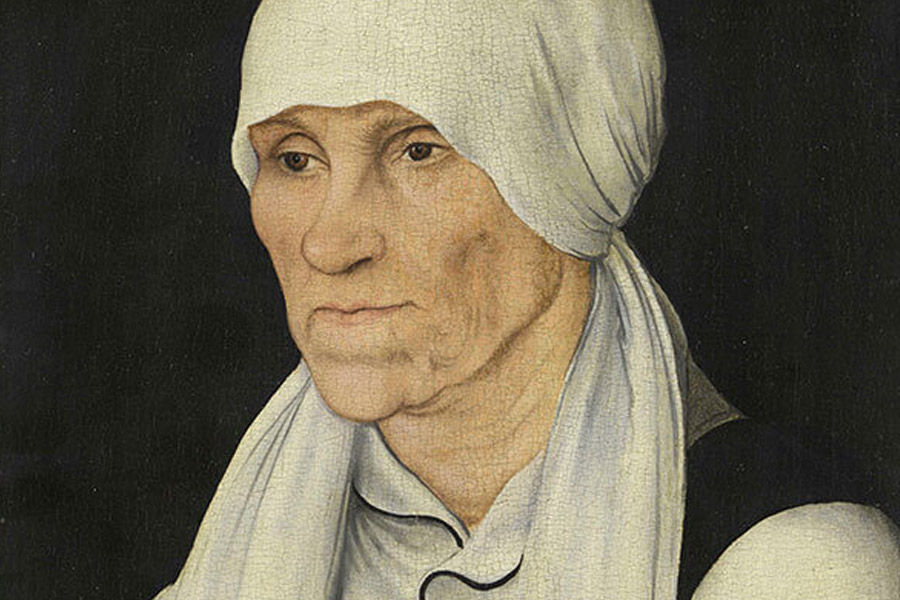
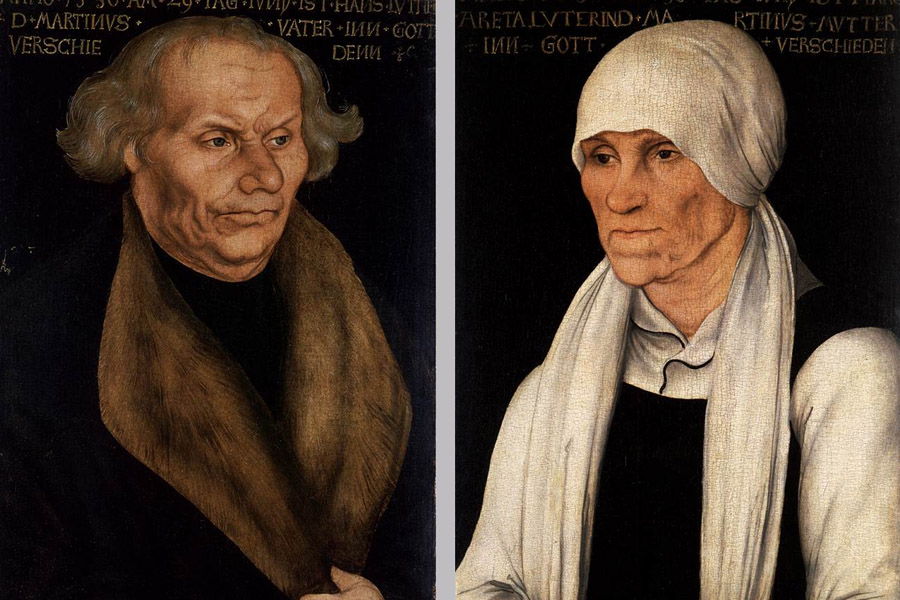
Lucas Cranach the Younger painted a beautiful portrait of Margaretha Luther. The painting is usually dated to 1557, when she was 23. The somber, precise Cranach studio was closely associated with the Luther family. A steady stare from the sitter. The painter meticulously records clothing and jewels, symbolizing class and affiliation.
Whether the panel hung in Wittenberg or traveled east with her is unknown. Portraits provide a face to go with family trees and dates. A person returns from paper to the room. It reminds us that the youngest Luther was a woman who caught a painter’s eye, not just a name.
Timeline
| Year and date | Event |
|---|---|
| 17 December 1534 | Birth in Wittenberg |
| 1542 | Death of her sister Magdalena at age 13 |
| 1546 | Death of her father, Martin Luther |
| 1552 | Death of her mother, Katharina von Bora |
| 5 August 1555 | Marriage to Georg von Künheim in Wittenberg |
| circa 1557 | Portrait attributed to Lucas Cranach the Younger completed |
| circa 1559 | Birth of daughter Margareta, commonly recorded in family lists |
| circa 1563 | Birth of daughter Anna, commonly recorded |
| 1570 | Death in East Prussia, often reported as 3 March |
Memory, Mentions, and the Afterlife of a Name
Margaretha resides in two main areas. First, Cranach panels underpin museum labels and display texts in visual culture. Second, family historians trace Luther’s Prussian and Baltic ancestry. Her birth in December 1534 and marriage in August 1555 are noted on anniversaries. The timeline is a locket despite estates disappearing or changing borders.
Most Reformation remembrances focus on her parents. However, the youngest daughter’s relocation from Saxony to Prussia indicates how European movements turned domestic. It made arguing customary and shaped daily life. Her story leads to a meaningful place down a quiet corridor in a busy hall.
FAQ
Who was Margaretha Luther?
She was the youngest child of Martin Luther and Katharina von Bora, born in Wittenberg in December 1534.
Whom did she marry and when?
She married Georg von Künheim, an East Prussian nobleman, on 5 August 1555 in Wittenberg.
Did she have children?
Yes, several children are recorded, most commonly daughters named Margareta and Anna.
Is there a surviving portrait of her?
A portrait identified as Margaretha Luther is attributed to Lucas Cranach the Younger and dated around 1557.
Did she write letters or leave personal papers?
No personal writings by her are known to survive.
Where did she live after marriage?
She moved from Wittenberg to East Prussia, residing on Künheim family estates.
When did she die?
She died in 1570, with some records giving 3 March and variant places in East Prussia.
Why is she historically notable?
She connects the Luther family to Prussian noble lines and remains a visible figure through her attributed Cranach portrait.