Basic Information
| Field | Details |
|---|---|
| Full name | Johan van Gogh |
| Birth | March 26, 1922, Amsterdam, Netherlands |
| Death | February 21, 2019, The Hague, Netherlands |
| Age at death | 96 |
| Nationality | Dutch |
| Occupations | Intelligence officer; arts foundation executive |
| Known for | Great-nephew of Vincent van Gogh; grandson of Theo van Gogh; president of the Van Gogh Foundation; support for the 1962 donation that enabled the Van Gogh Museum |
| Parents | Vincent Willem van Gogh (1890 to 1978) and Josina Wibaut (1890 to 1933) |
| Siblings | Theodoor van Gogh (c. 1920 to 1945), Florentinus Marinus van Gogh, Mathilde Johanna van Gogh |
| Spouse | Anneke Vonhoff |
| Children | Theodoor (Theo) van Gogh (1957 to 2004), plus two additional private children |
| Grandchildren | Lieuwe van Gogh (born c. 1992) |
| Key roles | Dutch domestic security service officer; President, Van Gogh Foundation (1984 to 1995) |
| Hallmark memory | Slept beneath Almond Blossom as a child, with Sunflowers nearby on the family walls |
Early Life Among Masterpieces
Art history was close to Johan van Gogh. In the family house, his great-uncle Vincent’s paintings were living on everyday walls. In Johan’s bedroom, a cold almond flower painted to welcome his father’s birth lit up the night. Nearby sunflowers were not yet the global symbol they would become. Interwar Amsterdam boys saw art as family letters in color, reminders that creativity is personal before public.
His parents protected family and culture. The Engineer, Vincent Willem van Gogh, carefully handled the collection. In 1933, Josina Wibaut died too young, but her heritage connected Johan to the civic-minded Wibaut family. Johan built a life of prudence, service, and stewardship from this memory and obligation matrix.
War, Loss, and a Path into Intelligence
World War II tore Johan’s life apart. In a terrible retaliation, the Gestapo killed his elder brother Theodoor and over 250 Dutch resistance members on March 8, 1945. Date weight never lifted. Johan joined the BVD, the Dutch Domestic Security Service, after the war for secrecy and stability.
The Cold War Professional: BVD to AIVD
Johan worked inside the Netherlands’ security apparatus as Europe froze into blocs and fault lines. The BVD, subsequently AIVD, fought Soviet influence and detected democratic risks. Public records are scarce. His work was classified, his tales unknown. Family and colleagues describe a steady presence who considered silence part of the profession. The service required patience and judgment, which he showed.
The 1962 Gift and the Birth of a Museum
The family and Dutch state reached a groundbreaking arrangement in 1962 to place the Van Gogh collection in public care. Around 200 paintings and 400 drawings circulated among relatives advanced toward a future when anyone may stand before them. The family received 15 million guilders, or 7 million euros, a fraction of the collection’s value. Johan supported his father, knowing that a legacy’s reach is more important than its price.
The agreement laid the groundwork for the Van Gogh Museum in Amsterdam, which opened a new chapter in the painter’s posthumous life. Within a generation, crowds would queue around the block to see what had once hung over Johan’s own pillow.
President of the Van Gogh Foundation 1984 to 1995
Johan was president of the Van Gogh Foundation, which controlled the family’s art and worked with the museum, from 1984 until 1995. These years were critical for conservation, exhibition planning, and scholarship. He preferred consensus over theatrics and influenced without display. The goal was to preserve paintings and drawings and maintain the family’s delicate balance between reverence and accessibility.
Family Ties: A Living Lineage
Johan’s genealogy reads like a corridor linking the 19th century art world to the 21st century city.
- Grandparents: Theo van Gogh, the art dealer who championed Vincent, and Johanna van Gogh-Bonger, the indefatigable editor who preserved the letters and shaped Vincent’s reputation.
- Parents: Vincent Willem and Josina, custodians in an era when the works needed guardians more than marketers.
- Siblings: Theodoor, whose life was cut short in 1945; Florentinus Marinus; and Mathilde Johanna.
- Spouse: Anneke Vonhoff, partner in a life that valued privacy.
- Children: Theo van Gogh, the filmmaker whose fierce voice electrified and scandalized Dutch culture, and two additional children who have chosen to stay outside publicity.
- Grandson: Lieuwe van Gogh, an artist and performer who carries the surname and the spark into a new age.
Tragedy and Resilience
Johan endured two generational shocks. His brother’s 1945 execution was occupation darkness. Nearly sixty years later, his filmmaker son Theo was murdered on an Amsterdam street on November 2, 2004. The loss rang loudly beyond the family, but Johan saw it as a second bell. He lived quietly, shielding sadness and duty.
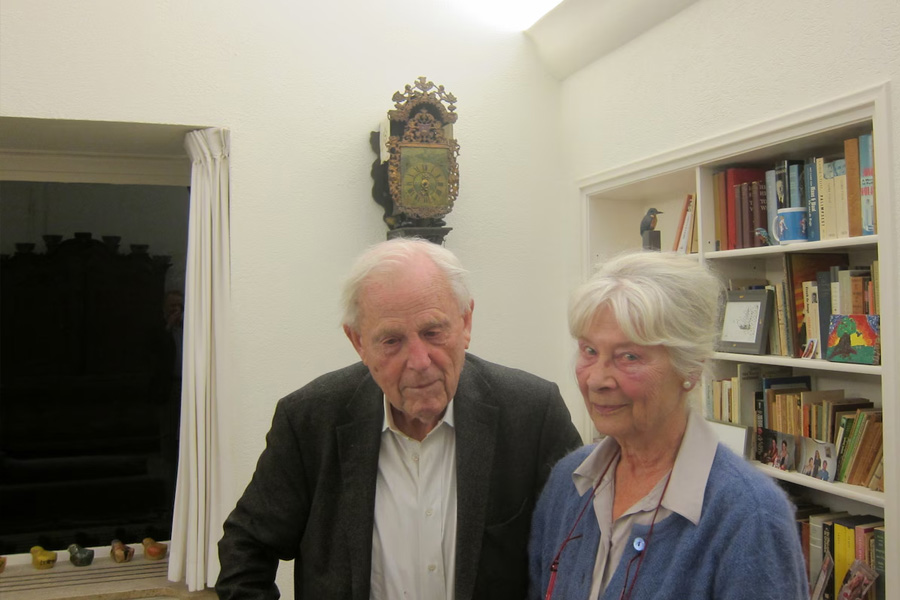
Timeline of a Long Life
| Year | Event |
|---|---|
| 1922 | Born in Amsterdam on March 26 |
| 1920s to 1930s | Childhood among Vincent’s paintings, including Almond Blossom in his bedroom |
| 1933 | Death of mother, Josina Wibaut |
| 1945 | Brother Theodoor executed by Gestapo on March 8 |
| Post 1945 | Joins Dutch Domestic Security Service, BVD |
| 1962 | Supports family transfer of collection to Dutch state, enabling Van Gogh Museum |
| 1984 to 1995 | President of the Van Gogh Foundation |
| 2004 | Son, filmmaker Theo van Gogh, murdered on November 2 |
| 2018 to 2019 | Receives a dried leaf tied to the almond tree linked to Almond Blossom; reflects on modern fame and security |
| 2019 | Dies in The Hague on February 21 |
Numbers Behind the Legacy
| Item | Approximate figure |
|---|---|
| Paintings in 1962 transfer | c. 200 |
| Drawings in 1962 transfer | c. 400 |
| Compensation in 1962 | 15 million guilders, roughly 7 million euros at the time |
| Years as Foundation president | 11 |
| Age at death | 96 |
These figures quantify decisions that reshaped public art, yet they only hint at the generosity involved. What was once a private inheritance became a civic treasure.
A House of Memories: Almond Blossom and Sunflowers
Almond Blossom, Vincent’s 1890 painting celebrating Johan’s father’s birth, became Johan’s boyhood friend. He later recounted a family anecdote of pillow fights and juvenile pastimes, with valuable wall paintings as unassuming witnesses. Decades later, he received a dried leaf from the almond tree in the artwork, a memento that reversed time. He was amazed that these family heirlooms needed guards and glass. Fame turned the family album into a world atlas.
The Modest Custodian
Johan did not make great pronouncements. He kept a calm surprise at the enthusiasm for his great-uncle’s efforts. The chain that united a local preacher’s son, a struggling painter, a caring brother and sister-in-law, and a mechanically minded heir eventually led to a museum that attracts millions of visitors. Johan stood within that line without attempting to bend it towards himself. The intelligence officer’s discipline and the foundation president’s patience offered the public a better understanding of genius.
Family Overview at a Glance
| Relation | Name | Notes |
|---|---|---|
| Great-uncle | Vincent van Gogh | Painter |
| Grandfather | Theo van Gogh | Art dealer and Vincent’s brother |
| Grandmother | Johanna van Gogh-Bonger | Editor of Vincent’s letters |
| Father | Vincent Willem van Gogh | Engineer; steward of the collection |
| Mother | Josina Wibaut | Daughter of Florentinus Marinus Wibaut |
| Spouse | Anneke Vonhoff | Partner in a private life |
| Children | Theodoor (Theo) van Gogh; plus two private children | Filmmaker son murdered in 2004 |
| Grandchild | Lieuwe van Gogh | Artist and performer |
| Siblings | Theodoor; Florentinus Marinus; Mathilde Johanna | Brother Theodoor executed in 1945 |
Legacy and the Museum Age
A creative public square, the Van Gogh Museum. It exists because of the family’s 1962 decision, which Johan backed and protected through his foundation leadership. He connected kitchen-table provenance to conservation labs and worldwide audiences. If Vincent’s brush whirled stars, Johan’s discretion stilled them.
FAQ
Who was Johan van Gogh?
He was a Dutch intelligence officer and arts foundation leader, best known as Vincent van Gogh’s great-nephew and a key family steward of the Van Gogh legacy.
How was he related to Vincent van Gogh?
Johan was the grandson of Vincent’s brother Theo and thus Vincent’s great-nephew.
What role did he play in Dutch intelligence?
He served in the Dutch Domestic Security Service, later known as the AIVD, focusing on Cold War threats with details largely classified.
What did he do for the Van Gogh Museum?
He supported the 1962 family transfer of the collection to the Dutch state and later led the Van Gogh Foundation from 1984 to 1995.
How many works were included in the 1962 transfer?
Approximately 200 paintings and 400 drawings were transferred.
What compensation did the family receive in 1962?
They received 15 million guilders, roughly 7 million euros at the time.
What tragedies marked his life?
His brother was executed by the Gestapo in 1945 and his son, filmmaker Theo van Gogh, was murdered in 2004.
Who was his spouse and did he have children?
He married Anneke Vonhoff and had three children, including the filmmaker Theo; two children remain private.
Who is his grandson?
Lieuwe van Gogh, an artist and performer who has embraced the family’s creative heritage.
When did Johan van Gogh serve as president of the Van Gogh Foundation?
He served from 1984 to 1995.