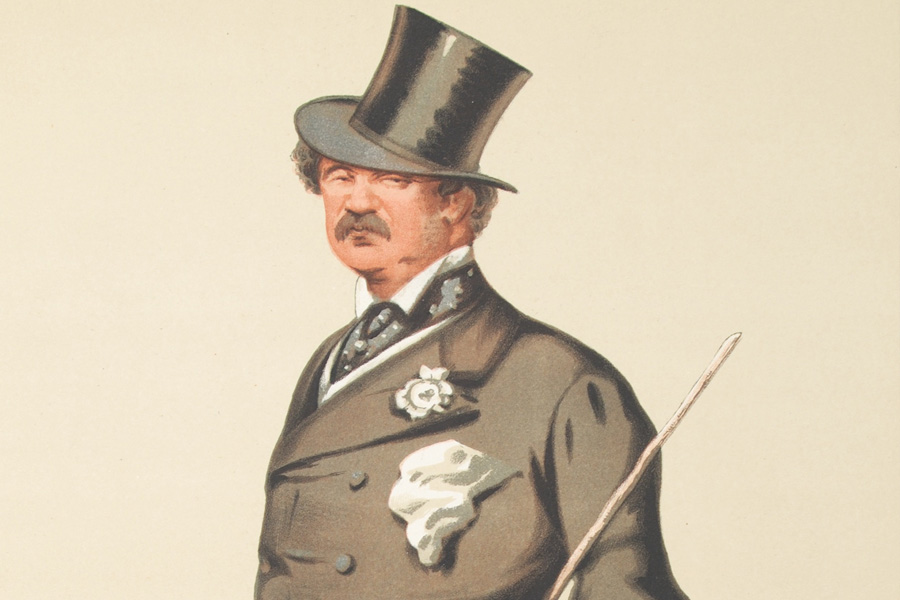
Basic Information
| Field | Details |
|---|---|
| Full name | Lord Alfred Henry Paget CB |
| Birth | 26 June 1816, Cavendish Square, London |
| Death | 24 August 1888, aboard his yacht off Inverness, Scotland |
| Burial | St Mary’s Church, Hampton |
| Parents | Henry William Paget, 1st Marquess of Anglesey, and the Hon. Charlotte Cadogan |
| Education | Westminster School |
| Spouse | Cecilia Wyndham, married 8 April 1847 |
| Children | 14 |
| Residences | 42 Grosvenor Place, London; Melford Hall, Sudbury, Suffolk |
| Military service | Royal Horse Guards (Blues), lieutenant 1834; lieutenant colonel (unattached) by 1854 |
| Parliamentary service | Liberal MP for Lichfield, 1837 to 1865 |
| Court appointments | Chief Equerry and Clerk Marshal to Queen Victoria 1846 to 1858 and 1859 to 1874; Clerk Marshal 1874 to 1888 |
| Other roles | Director, North Staffordshire Railway 1854 to 1875; Commodore and later Vice Commodore, Royal Thames Yacht Club |
| Honours | Companion of the Order of the Bath |
Origins and Education
With position and reputation, Lord Alfred Henry Paget was born. The 1st Marquess of Anglesey, famous for Waterloo, and Charlotte Cadogan, a descendant of the Earls Cadogan and Churchill, had him as their sixth child. The Westminster School polish gave chance. Lord Alfred had half siblings and early diplomatic and courtly exposure through his mother’s marriage to Henry Wellesley, subsequently 1st Baron Cowley. He was at the center of Victorian public life and aristocratic duty from the start.
Soldier and Courtier
His Royal Horse Guards service began in 1834. The Blues required composure and presence, which translated well into royal service. He was promoted to lieutenant colonel unattached in 1854, recognizing his seniority and releasing him from other duties. That independence was important because he would play in the Queen’s Household. As Chief Equerry and Clerk Marshal since 1846, he was essential to monarchy operations.
Two phases defined his court career. He held the combined offices from 1846 to 1858 and 1859 to 1874. From 1874 to 1888, he was Clerk Marshal alone. The equerry worked personally at the sovereign’s elbow. The Clerk Marshal managed the Board of Green Cloth’s payments, provisions, and economy. He liked the ceremonial-ledger balance. For over four decades, his presence in the royal household anchored Victoria’s reign.
In the House of Commons
Lord Alfred was elected Liberal MP for Lichfield at 21 in 1837 and served until 1865. He was a tenacious Commons member for 28 years. He was a reliable backbencher Victorian politics relied on, despite his modest reforms and speeches. He softly connected the Palace and House by balancing party needs and court convenience.
Office, Accountability, and the Board of Green Cloth
His position as Chief Equerry and Clerk Marshal gave him exceptional power in Victorian administration. The equerry was privy to royal preference. Clerk Marshal’s ledger was for systems and supply. Lord Alfred performed administrative and courtier duties for the historic Board of Green Cloth. In an age of rising governmental bureaucracy, he kept royal service personal while tightening accountability.
Railways and the Spirit of the Age
He was North Staffordshire Railway director from 1854 to 1875. A courtier’s administrative skills naturally extended to the railway age’s iron web. The office lasted 21 years, coinciding with his household and parliamentary duties. His leadership guided a regional line through years of rapid growth when railways connected towns to markets and markets to empire.
Family Matrix
He married Cecilia Wyndham, second daughter and co-heiress of George Thomas Wyndham of Cromer Hall, on April 8, 1847. An already distinguished name gained wealth, Norfolk origins, and a large household with their marriage. The couple had 14 kids. Many daughters served Victoria. Sons filled army and navy ranks. The family names form a Victorian service map.
Children of Lord Alfred and Cecilia Wyndham
| Child | Years | Notes |
|---|---|---|
| Victoria Alexandrina Paget | 1848 to 1859 | Died in childhood |
| Evelyn Cecilia Paget | 1849 to 1904 | Maid of Honour to Queen Victoria, unmarried |
| Sir Arthur Henry Fitzroy Paget | 1851 to 1928 | General, Commander in Chief Ireland; married Mary Fiske Minnie Stevens, four children |
| Alfred Wyndham Paget | 1852 to 1918 | Admiral; married Viti Alpini Macgregor; one daughter |
| George Thomas Cavendish Paget | 1853 to 1939 | Major; raised Paget’s Horse for the Boer War; married Dorothy St. Vincent Parker Jervis, no children |
| Gerald Cecil Stewart Paget | 1854 to 1913 | Captain; married Lucy Annie Emily Gardner; two daughters; grandfather of Percy Bernard, 5th Earl of Bandon |
| Violet Mary Paget | 1856 to 1908 | Married Rev. Sholto Campbell, 2nd Baron Blythswood, no children |
| Sydney Augustus Paget | 1857 to 1916 | Married Mary Elizabeth Dolan, no children |
| Amy Olivia Paget | 1858 to 1948 | Unmarried |
| Alberta Victoria Paget | 1859 to 1945 | Unmarried |
| Almeric Hugh Paget | 1861 to 1949 | Created 1st Baron Queenborough; MP; married Pauline Payne Whitney then Edith Starr Miller; five daughters across both marriages |
| Alice Maud Paget | 1862 to 1925 | Married Captain Claud Edward Stracey Clitherow, no children |
| Alexandra Harriet Paget | 1863 to 1944 | Married Edward Colebrooke, 1st Baron Colebrooke; three children |
| Guinevere Eva Paget | 1869 to 1894 | Married Reginald Charles Hart Dyke; one son |
His siblings and extended family connected him to Anglesey and Cadogan. He had half Cowley siblings from his mother’s first marriage to Henry Wellesley. He was related to Patrick Lewis Cole Paget, Francis Edward Paget, Henry William Paget, Frances Paget, Edward Paget, and Caroline Paget through his father’s large family. The name web went beyond genealogy. Service, patronage, and alliance continued.
Homes, Harbors, and a Final Voyage
Lord Alfred’s life revolved around two primary residences. He was near the Palace at 42 Grosvenor Place, in the capital’s core. Melford Hall, a historic country house in Suffolk, provided seasonal relief. A third residence at sea was between London streets and Suffolk lawns.
Yachting was his passion. He enjoyed flying the burgee as Royal Thames Yacht Club Commodore and Vice Commodore. He knew the Colne estuary’s waterways and shipyards, and his widow endowed Rowhedge alms cottages in his memory. The waves framed his final chapter. He died suddenly on his yacht near Inverness in August 1888 at 72. A life spent in court and in chambers locked under a northern sky, mainsail set, tide running.
Service to Sovereign and State
His public life spanned years. Twenty-eight years in Parliament. About 42 years in home duty, from 1846 to 1888. Two decades on a rail board. Such numbers lack drama. However, they describe Victorian obligation. Instead of a reformist or battlefield general like his father, he was a patient steward. He maintained respect and order among pageants and politics.
Timeline at a Glance
| Year | Event |
|---|---|
| 1816 | Born in London, 26 June |
| 1834 | Commissioned lieutenant, Royal Horse Guards |
| 1837 | Elected MP for Lichfield, Liberal |
| 1846 | Appointed Chief Equerry and Clerk Marshal to Queen Victoria |
| 1847 | Married Cecilia Wyndham |
| 1848 to 1869 | Fourteen children born |
| 1854 | Promoted lieutenant colonel (unattached); joined North Staffordshire Railway board |
| 1859 to 1874 | Resumed combined household roles |
| 1874 to 1888 | Clerk Marshal |
| 1888 | Died at sea aboard his yacht, 24 August |
Descendants and Connections
After Lord Alfred, the Paget family permeated public life. Commanding Officer in Ireland Sir Arthur Henry Fitzroy Paget was a senior soldier. Admiral Alfred Wyndham Paget continued naval tradition. Almeric Hugh Paget, subsequently 1st Baron Queenborough, married into American wealth and culture and served in the Commons and Lords. Gerald Cecil Stewart Paget connected Percy Bernard, 5th Earl of Bandon. Alexandra Harriet Paget married the 1st Baron Colebrooke, adding an additional peerage and three descendants. Uniformed service, legislative benches, and courtly relationships endure across various branches.
Reputation and Memory
Lord Alfred Paget was known for devotion, efficiency, and tact. He was a remarkable custodian of spirit and account who kept books and ceremonies. Modern paintings are occasionally colored for drama. Television portrays him romantically, with freer plotlines than the record. Historical figures are quieter but more stable: equerries to their sovereigns, parliamentarians to their constituents, and yachtsmen to the tide.
FAQ
Who was Lord Alfred Paget?
A British soldier, courtier, and Liberal politician, he served Queen Victoria for decades while sitting as MP for Lichfield from 1837 to 1865.
How many children did he have?
He and his wife Cecilia Wyndham had fourteen children between 1848 and 1869.
What were his key royal household roles?
He was Chief Equerry and Clerk Marshal in 1846 to 1858 and 1859 to 1874, then Clerk Marshal alone from 1874 to 1888.
Where did he live?
He kept a London house at 42 Grosvenor Place and a country seat at Melford Hall in Suffolk.
What was his military background?
He was commissioned in the Royal Horse Guards in 1834 and reached lieutenant colonel unattached by 1854.
What were his interests outside court and politics?
Yachting was his passion, and he served as Commodore and later Vice Commodore of the Royal Thames Yacht Club.
How did he die?
He died suddenly at age 72 aboard his yacht off the coast near Inverness on 24 August 1888.
Is he depicted in modern media?
Yes, he has been portrayed on television, though such depictions take liberties with historical details.
Did any of his children achieve notable distinction?
Yes, Sir Arthur became a general, Alfred Wyndham an admiral, and Almeric Hugh was created 1st Baron Queenborough.
Where is he buried?
He is buried at St Mary’s Church, Hampton.