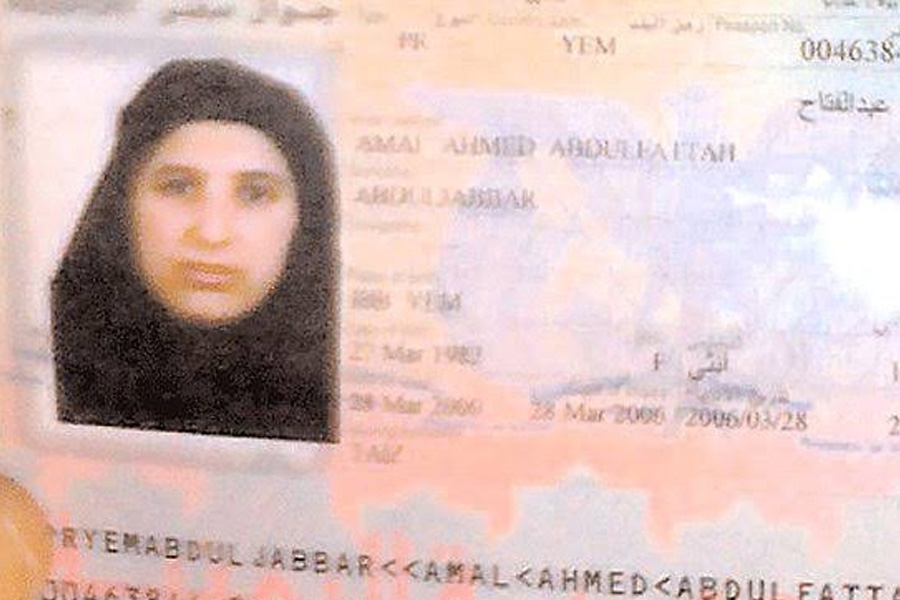
Early Life and Background
When I trace the story of Amal Al-sadah, I begin in Yemen around 1982, where she was born into a conservative and respectable family. Her father worked as a minor civil servant, and her upbringing reflected modest means paired with traditional values. Her mother was divorced, a detail that quietly shaped the household dynamic.
I picture her as a young girl described by relatives as quiet and polite, yet inwardly curious. She left school early, but not because she lacked ambition. Instead, she reportedly longed for knowledge and a larger role in life. There was a sense, almost like a spark beneath still water, that she wanted to be part of something bigger than her immediate surroundings.
Marriage and Entry into a Hidden World
Around late 1999 or 2000, when Amal Al-sadah was about 17 or 18, her life shifted dramatically. Her marriage to Osama bin Laden was arranged through intermediaries connected to his Yemeni network. He was in his early forties at the time, a man already deeply embedded in global events.
I see this moment as a crossing of thresholds. She traveled from Yemen through Dubai and Pakistan before reaching Afghanistan, where the marriage took place. The Kandahar region became the setting of her new life, far removed from everything familiar.
Relatives later said she saw her family only once after leaving Yemen. That brief reunion feels like a flicker of light in an otherwise long stretch of separation.
Life Within the Household
Amal Al-sadah became one of several wives in the household, but she was frequently referred to as the youngest and perhaps the most favored. Ease did not follow from that status. Other wives reportedly distanced themselves from her on occasion, resulting in a subtle but enduring tension.
Her life seems to me to be full of contradictions. She was both the center and the periphery, respected but apart. She reportedly stated early on that she would stay with her husband even if it put her in danger, a choice that would define her life for years to come.
Family life was the main focus of her part. A career, commercial activity, or independent financial standing are not publicly disclosed. The hidden and intimate world she lived in became entwined with her identity.
Children and Family Bonds
Amal Al-sadah had five children, each born during a life marked by movement and secrecy.
Safiyah, her eldest daughter, was born around September 2001 near the time of the attacks in the United States. I picture that moment as symbolic, a child entering the world at the same time global events reshaped history. Safiyah was present during the Abbottabad raid years later and reportedly comforted her injured mother.
Ibrahim followed as one of her sons, though fewer public details exist about his early life.
Aasiah and Zainab, her daughters, grew up within the same confined environment, shaped by the rhythms of hidden living.
Hussein, one of the youngest, was about two years old in 2011. He was present in the bedroom during the raid, a detail that underscores how deeply family life and danger overlapped.
Some accounts mention another possible child or name variation, though confirmation remains uncertain.
What stands out to me is that these children were raised almost entirely within enclosed spaces, with limited exposure to the outside world. Their upbringing was not defined by ordinary milestones but by secrecy and constant caution.
Years in Hiding
After 2001, the family moved through a series of safe houses. Pakistan became a central location, with periods spent in cities like Karachi before settling in Abbottabad around 2005.
The Abbottabad compound became their longest residence. I imagine it as both shelter and cage. Amal Al-sadah reportedly lived on the upper floors for about five years, rarely stepping outside. When she did leave, it was under disguise, sometimes for medical needs such as childbirth.
Daily life unfolded behind walls. Children played in confined spaces. Communication with the outside world was minimal. The routine must have felt like a slow passage of time, each day blending into the next.
The 2011 Abbottabad Raid
Everything changed on May 2, 2011. I picture the compound’s quiet being broken by the abrupt sound of helicopters. In a matter of minutes, the night descended into anarchy.
Amal Al-sadah, her spouse, and their small children were in the bedroom. According to reports, she was shot in the leg when she approached or confronted the soldiers. Both literally and symbolically, the injury was a turning moment. The secret life was now visible.
During the raid, her kids were there. Hussein was in the same room as Safiyah, who allegedly saw the aftermath. The family was profoundly impacted by these experiences.
She and the remaining family members were placed under Pakistani custody following the procedure.
Detention and Interrogation
Following the raid, Amal Al-sadah spent nearly a year in detention. Initially held in secure facilities, she was later moved to a guarded residence in Islamabad.
Life during this period was restrictive. I imagine rooms with limited light, constant supervision, and children confined indoors. Reports mention emotional distress and even refusal of food at times.
She was questioned extensively by authorities. Her statements helped piece together years of hidden movement, including safe houses and daily routines. She described long periods of isolation and minimal contact with the outside world.
Her brother Zakaria visited occasionally under supervision. These visits likely carried both comfort and the weight of uncertainty.
Legal Proceedings and Deportation
Immigration offenses were the main subject of court actions in 2012. Amal Al-sadah received a brief jail sentence and a fine, along with other family members.
Deportation plans were in place at the end of April 2012. Along with other family members, she and her kids were evacuated out of Pakistan.
Saudi Arabia was chosen as a stopover. Despite being Yemeni, she stayed there for a while instead of going back to Yemen right away.
Life After Detention
After her release, public information about Amal Al-sadah became scarce. I see this phase as a return to silence, but of a different kind. It was no longer enforced by hiding but chosen through privacy.
Her life appears to have centered on raising her children and staying out of public view. There are no widely reported interviews, public appearances, or independent pursuits.
The absence of information itself tells a story. It reflects a deliberate step away from the spotlight that once surrounded her.
Family Connections and Support
Throughout her detention and afterward, her family played a significant role. Her father, brother Zakaria, and extended relatives advocated for her release and return.
They described her as gentle, respectful, and strong in quiet ways. Their efforts highlight the enduring ties between her and her family in Yemen, despite years of separation.
FAQ
Who is Amal Al-sadah
I understand her as a Yemeni woman born around 1982 who became the youngest wife of Osama bin Laden and lived much of her adult life in secrecy before being detained after the 2011 raid.
How many children does Amal Al-sadah have
She is reported to have five children, including Safiyah, Ibrahim, Aasiah, Zainab, and Hussein, all raised largely within hidden environments.
What happened to her during the 2011 raid
She was wounded in the leg during the operation in Abbottabad and was present with her children when the raid occurred.
How long was she detained
She spent nearly one year in Pakistani custody from May 2011 until April 2012, including periods of interrogation and house arrest.
What is known about her life today
Very little is publicly known. She maintains a low profile, focusing on her family and avoiding public attention.
Did she have a career or independent achievements
There are no widely reported independent career activities or financial ventures. Her life was primarily centered on family and the circumstances of her marriage.