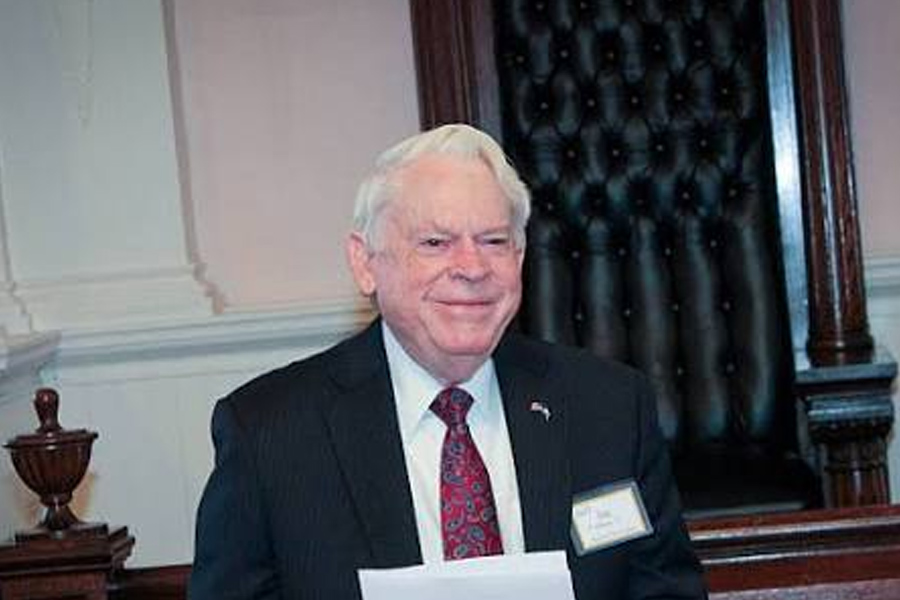
When I look at the life of Joseph P Johnson, I see a story shaped by service. His career crossed several worlds: military service, private law, the Virginia House of Delegates, education, veterans affairs, community organizations, and family life. For more than six decades, his name was closely connected with Abingdon and Washington County, Virginia.
Joseph Pickett Johnson Jr., commonly known as Joe Johnson or Joseph P Johnson, was born on December 12, 1931, in Hayter’s Gap, Washington County. His parents were Joseph Pickett Johnson Sr., a dairy farmer, and Gray Henderson Johnson. He grew up in the region that would remain his home throughout his life.
His path from a rural Virginia upbringing to the Virginia Capitol was not simply a political journey. It was a long record of participation in the institutions around him. He practiced law, served in the military, represented Southwest Virginia in Richmond, supported colleges and community organizations, and remained deeply involved in civic life.
Early Life and Education
Joseph P Johnson grew up in Washington County and attended Meadowview High School. His education continued at Emory & Henry College, where he earned a Bachelor of Arts degree in 1957.
After college, he studied law at the University of Richmond’s T.C. Williams School of Law. He received his LL.B. in 1960 and returned to Abingdon, beginning his legal practice in August of that year.
Law became the foundation of his professional life. Over approximately 60 years, he handled a broad range of matters, including criminal law, personal injury, real estate, civil litigation, family law, corporate matters, and business law. In his later years, he practiced with Johnson & Cumbow.
I find the longevity of that career particularly striking. Johnson did not treat law simply as a profession confined to an office. His legal career became intertwined with his public service and his relationships throughout Southwest Virginia.
Military Service and Operation Castle
Before entering law, Johnson served in the United States Air Force from 1951 through 1955 during the Korean War era. His service included participation connected with Operation Castle, the major American thermonuclear testing series conducted in the Pacific in 1954.
Operation Castle consisted of six tests between March 1 and May 14, 1954. The tests took place primarily at Bikini Atoll, with the final test, Nectar, conducted at Enewetak.
The most famous detonation was Castle Bravo on March 1, 1954. The device, known as Shrimp, was designed around dry lithium deuteride fuel and had an expected yield of approximately 6 megatons. Instead, it produced about 15 megatons, making it the largest American atmospheric nuclear test ever conducted.
The enormous explosion generated widespread radioactive fallout. Marshallese communities on several atolls were affected, and the Japanese fishing vessel Daigo Fukuryu Maru was contaminated. The event became an important chapter in the history of nuclear testing and demonstrated how difficult it was to predict and control the consequences of atmospheric nuclear detonations.
Johnson’s participation in the testing era added an unusual dimension to his military background. Decades later, his service continued to be recognized. In 2021, he was honored at Abingdon’s Veterans Memorial Park. He also served as a trustee and past chairman of the Virginia War Memorial Foundation Board and was active with American Legion Post 12, including service as post commander.
Joseph P Johnson in Virginia Politics
In the 1960s, Johnson joined the Virginia House of Delegates for the first time. He represented the 63rd District, which comprised Bristol, Scott, and Washington counties, from 1966 to 1969.
He ran for the 9th Congressional District seat in the US House of Representatives in 1968. He unsuccessfully challenged Republican incumbent William C. Wampler.
Johnson focused on raising his young children after leaving the House in 1969. One reason he decided not to run for reelection right away was the length of the trip to Richmond, especially before Interstate 81 became a significant regional route.
But his political career was far from over.
Following the 1989 election, Johnson returned to the House, where he served from 1990 to 2014. Bristol and parts of Smyth and Washington counties were among the districts he served during that time. He frequently encountered little to no resistance and rose to prominence in the politics of Southwest Virginia.
Finance, Courts of Justice, Commerce and Labor, and Rules were among the committees he was assigned to. Prior assignments included banking and insurance, roads, and police and militia.
His political activism frequently addressed pragmatic local issues. Themes that kept coming up included education, transportation, rural development, youth, elderly, and economic prospects. He became involved in Southwest Virginia’s agricultural and economic development challenges through his work with the Virginia Tobacco Indemnification and Community Revitalization Commission.
A Champion of Education and Regional Development
One of the clearest themes in Johnson’s public life was education.
He was a charter member and leader of the board of the Southwest Virginia Higher Education Center. The center’s Grand Hall was later named in his honor, reflecting his role in supporting higher education opportunities in the region.
His connection with Emory & Henry College was similarly deep. He served for many years on its Board of Trustees and eventually chaired the board. In 2001, he received a Charter Day citation, and in 2013 he was awarded an honorary Doctor of Humane Letters.
Virginia Highlands Community College also recognized his contributions. A scholarship bears his name, as does a board room, and in 2015 he received an honorary Associate of Humane Letters.
These honors reveal something important about Johnson’s philosophy. He invested in institutions designed to benefit people long after a legislative session ended. A scholarship can open a door for a student. A community college can change the direction of a career. A regional education center can give rural communities opportunities that might otherwise remain out of reach.
Community Leadership and Civic Life
Johnson’s public service extended far beyond elected office.
He participated in Abingdon Baptist Church as a Sunday school teacher and member of the Council of Deacons. He was involved with Abingdon Civitan, Masonic Lodge 48, the Order of Eastern Star, Odd Fellows, Shriners, the Red Cross, cancer-related efforts, mental health organizations, and numerous other civic activities.
His honors were numerous. Among them were Jaycees Man of the Year in 1967, the Ernest S Yeatts Service Award in 1994 for work with older citizens, Legislator of the Year from the Virginia Treasurers Association in 2003, the Arthur Campbell Fellows Award from the Town of Abingdon in 2011, and the Virginia School Boards Association Legislative Award of Excellence in 2013.
Washington County also designated December 12 as Delegate Joseph Pickett Johnson Jr Day.
I see these recognitions as pieces of a larger picture. Johnson’s influence was not limited to Richmond. Much of his legacy was built through meetings, boards, classrooms, churches, veterans groups, legal offices, and conversations with local residents.
Joseph P Johnson and Mary Ann Allison Johnson
Johnson’s marriage to Mary Ann Allison Johnson was the driving force behind his lengthy public career. Together, they raised three children over their 64-year marriage.
Ernest Allison and Alice Brannon Allison welcomed Mary Ann into the world on April 17, 1936, in Saltville, Virginia. She was a cheerleader at R B Worthy High School, where she earned the moniker Miss Allison’s Gap.
Her interests and educational background included nursing school and secretarial training. She was involved in the Abingdon Business and Professional Women’s Club, the Girl Scouts, the Democratic Party, tutoring, and the Order of Eastern Star, where she was a Past Worthy Matron.
She has a close relationship with Abingdon Baptist Church. She took part in church circles, Sunday school, Vacation Bible School, and the choir. She also assisted with food pantry operations and worked as a volunteer in a hospital gift store for almost 20 years.
Mary Ann balanced the responsibilities of family life with her husband’s political career. Bridge, baking, travel, gaming, athletic events, and spending time with family were all things she loved.
On July 19, 2022, she passed away. Just over two weeks later, on August 4 or 5, 2022, Johnson passed away at his Abingdon home. He was ninety years old.
The Children of Joseph P Johnson
Joseph and Mary Ann had three children who continued the family’s connection to Southwest Virginia and public service.
Mary Jo Neal
Their daughter, Mary Jo Neal, lived in Abingdon with her husband, Lewis. Her presence in the family represented one part of a household that remained closely connected across generations.
Joseph P Johnson III
Their son Joseph P Johnson III, also known as Joey, was associated with the Inman and Charleston areas of South Carolina. He was an Emory & Henry alumnus, with his college years associated with the class of approximately 1984.
His connection to the family name also reflected the educational tradition that his parents had worked so hard to support.
Judge Sage Brannon Johnson
Their son Judge Sage Brannon Johnson carried the family’s legal and public service tradition into another generation.
Sage earned a Bachelor of Arts degree from Hampden-Sydney College in 1992 and a Juris Doctor degree from the University of Richmond in 1995. He practiced law, including work with his father, before entering the judiciary.
He became a general district court judge in the 28th Judicial District and in 2012 was elected by the Virginia General Assembly as a circuit court judge for the 28th Judicial Circuit, serving Bristol, Smyth County, and Washington County.
The connection between father and son is especially notable because Joseph P Johnson himself had served as a substitute judge for the 28th General District Court from 1971 through 1989.
Six Grandchildren and Three Great Grandchildren
The Johnson family expanded to six grandchildren: Mary Lewis Huffman and her husband Chad, Ashley Brooke Hemmer and her husband Peter, Mary Catherine Clark and her husband Justin, Joseph Zachary Johnson and his wife Gracin, Finn Alexander Johnson, and William Pickett Johnson.
The family also included three great grandchildren as of 2022: Emma Grace Clark, Isley Ann Clark, and Joseph Beckett Johnson.
Family was clearly central to Johnson’s life. He was known for attending children’s and grandchildren’s sporting events, offering advice, and taking an active interest in their lives.
The image that emerges is less that of a distant political figure and more that of a grandfather sitting in the stands, a father following a child’s progress, and a community lawyer who knew generations of local families.
Brothers, Sisters and Extended Family
At the time of Johnson’s death, his surviving siblings included his brother James S Johnson and James’s wife, Diana, of Abingdon, and his sister Louise Litwin of Abingdon.
His predeceased siblings included Pauline Goodman and Kermit Johnson. His brother-in-law Walter Litwin was also predeceased.
His extended family included nieces and nephews who were remembered as important parts of his life.
A Family Shaped by Faith and Service
When I consider Joseph P Johnson’s family story, the strongest thread is continuity.
His father was a dairy farmer. Johnson became a lawyer and legislator. His son became a judge. His family established scholarships and educational connections. His name became attached to buildings, board rooms, and educational programs.
The family story also reflects the quieter work of Mary Ann Johnson. While Joseph spent long periods involved in law and public affairs, Mary Ann helped maintain the family and remained active in churches, civic organizations, volunteer work, and political life.
Their home life was therefore closely connected to the community around them. Public service was not simply Joseph’s individual pursuit. It was part of the rhythm of the household.
Later Years and Legacy
Despite health issues affecting his latter years, Johnson practiced law until about 2020. Despite fighting cancer for many years, he continued to be active in the community.
The same institutions that had shaped most of his life—veterans organizations, education, law, church, family, and Southwest Virginia civic life—marked his last years.
He was buried at Knollkreg Memorial Park after burial services at Abingdon Baptist Church. The visit was held at the Grand Hall of the Southwest Virginia Higher Education Center, an appropriate venue for a man whose name had come to represent educational opportunities in the area.
His career’s tangible relics are still strewn throughout Southwest Virginia. Scholarships carrying his name exist, as do educational institutions associated with his leadership, veteran awards, and governmental institutions influenced by his efforts.
FAQ
Who was Joseph P Johnson?
Joseph P Johnson was a Virginia lawyer, Democrat politician, U.S. Air Force veteran, judge, and community leader from Abingdon and Washington County. He served in the Virginia House of Delegates from 1966 to 1969 and again from 1990 through 2014.
When was Joseph P Johnson born?
Joseph P Johnson was born on December 12, 1931, in Hayter’s Gap, Washington County, Virginia.
When did Joseph P Johnson die?
Joseph P Johnson died at his home in Abingdon at age 90 on August 4 or 5, 2022. The reported date varies slightly among accounts.
Who was Joseph P Johnson’s wife?
His wife was Mary Ann Allison Johnson. They were married for 64 years and had three children. Mary Ann died on July 19, 2022, less than three weeks before her husband.
How many children did Joseph P Johnson have?
Joseph and Mary Ann Johnson had three children: Mary Jo Neal, Joseph P Johnson III, and Judge Sage Brannon Johnson.
Who was Judge Sage Brannon Johnson?
Judge Sage Brannon Johnson was Joseph P Johnson’s son. He studied at Hampden-Sydney College and the University of Richmond School of Law, practiced law, served as a general district court judge, and later became a circuit court judge in Virginia’s 28th Judicial Circuit.
How many grandchildren did Joseph P Johnson have?
Joseph P Johnson had six grandchildren: Mary Lewis Huffman, Ashley Brooke Hemmer, Mary Catherine Clark, Joseph Zachary Johnson, Finn Alexander Johnson, and William Pickett Johnson.
How many great grandchildren did he have?
As of 2022, Joseph P Johnson had three great grandchildren: Emma Grace Clark, Isley Ann Clark, and Joseph Beckett Johnson.
What was Joseph P Johnson’s military service?
He served in the U.S. Air Force from 1951 through 1955 during the Korean War era. His service included participation associated with Operation Castle, the American thermonuclear testing program conducted in the Pacific in 1954.
What was Joseph P Johnson’s connection to education?
Johnson was a strong advocate for education and served on the boards of organizations including Emory & Henry College and the Southwest Virginia Higher Education Center. Scholarships and facilities at Emory & Henry and Virginia Highlands Community College were named in his honor.
What did Joseph P Johnson do as a lawyer?
He practiced law in Abingdon beginning in 1960 and continued for roughly six decades. His practice included criminal law, personal injury, real estate, civil litigation, family law, corporate matters, and business law.
What was Joseph P Johnson known for?
He was known for long-term public service, constituent advocacy, education support, veterans affairs, regional development, civic leadership, and devotion to his family and Southwest Virginia community.