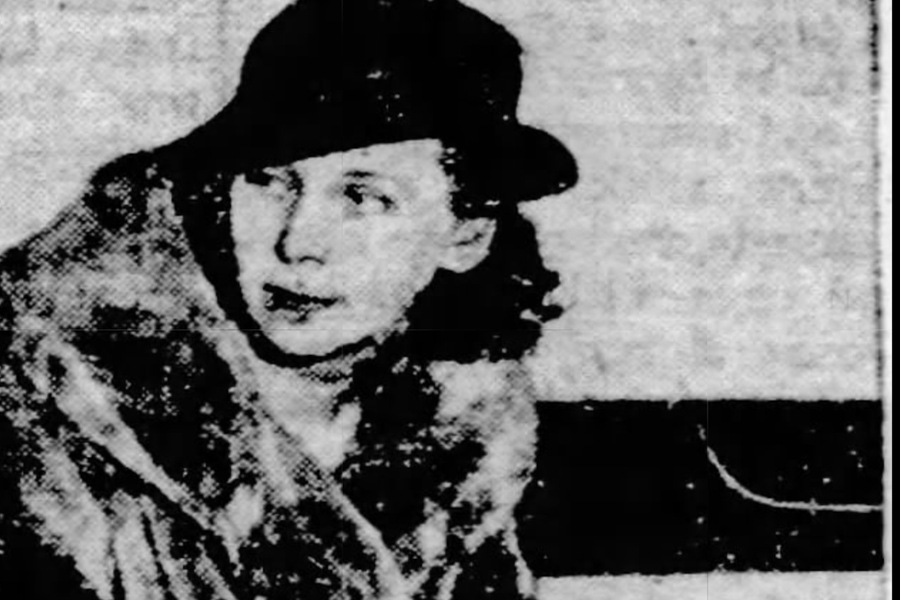
Basic Information
| Item | Details |
|---|---|
| Full Name | Gertrude M. Fish |
| Married Name | Gertrude DeMarco |
| Birth | March 25, 1904 |
| Birthplace | Flushing, Queens County, New York, USA |
| Death | July 13, 1989 |
| Age at Death | 85 |
| Place of Death | Volusia County, Florida, USA |
| Burial | Cemetery of the Holy Rood, Westbury, Nassau County, New York |
| Parents | Hamilton Howard “Albert” Fish and Anna Mary Hoffman |
| Spouse | John M. (John Marious) DeMarco |
| Children | Gloria Theresa DeMarco, Howard J. DeMarco, Rita Veronica DeMarco |
Growing Up as Gertrude Fish
When I look at the life of Gertrude Fish, I see a woman whose story was forever overshadowed by one of the darkest names in American criminal history. Yet her own life appears to have followed a very different path.
Gertrude M. Fish was born on March 25, 1904, in Flushing, Queens County, New York. She was the third of six children born to Hamilton Howard “Albert” Fish and Anna Mary Hoffman. While history remembers her father for horrific crimes that shocked America, Gertrude herself lived almost entirely outside public attention.
Unlike many relatives of infamous criminals who later spoke publicly, wrote memoirs, or became media figures, Gertrude chose privacy. Her story is one of ordinary family life rather than notoriety.
She spent her childhood during a period when New York City was rapidly expanding, neighborhoods were changing, and working class families often struggled to make ends meet.
The Fish Family
Gertrude belonged to a family that was large for its era.
| Family Member | Relationship | Lifespan |
|---|---|---|
| Albert H. Fish Jr. | Brother | 1899 to 1963 |
| Anna M. Fish Collins | Sister | 1900 to 1995 |
| Gertrude M. Fish | Herself | 1904 to 1989 |
| Eugene H. Fish | Brother | 1907 to 1977 |
| John W. Fish | Brother | About 1910 to 1989 |
| Henry Fish | Brother | 1913 to 1991 |
During their early childhood, the family lived a modest working class life in New York.
Their father earned income primarily as a house painter. Although he had already accumulated criminal convictions before Gertrude’s birth, the full extent of his violent behavior remained hidden from both society and, apparently, much of his own family.
The household changed dramatically in January 1917.
Gertrude was only 12 years old when her mother, Anna Mary Hoffman, left the marriage with a boarder named John Straube. Albert Fish then became the primary caregiver for all six children for a period of time.
Despite Albert Fish’s later reputation, contemporary accounts indicate that he continued supporting his children financially and did not subject them to the same extreme violence that characterized his crimes against victims outside the family.
Her Parents
It would be difficult for Gertrude’s parents to have encountered more disparate historical legacies.
Hamilton Howard “Albert” Fish, her father, was born in Washington, D.C. on May 19, 1870. Poverty, hospitalization, and a family history of mental illness characterized his incredibly challenging upbringing.
He looked to lead the life of a working husband and parent after his marriage to Anna Mary Hoffman on February 5, 1898. But behind that unremarkable exterior, he carried out crimes that would later make him one of America’s most notorious serial killers.
After divorcing Albert in 1917, Anna Mary Hoffman—who was almost nine years younger than Albert—was mostly forgotten in history accounts. All six children’s lives were drastically altered by her departure.
Years before her father’s crimes were made public, Gertrude had to grow up in a home run entirely by him as a result of their separation.
Grandparents and Extended Family
Gertrude’s paternal grandparents also experienced hardship.
| Grandparent | Details |
|---|---|
| Randall Fish | Born around 1795, died October 16, 1875 |
| Ellen Frances Howell Fish | Born around 1838, died around 1903 |
Randall Fish died when Albert was only about five years old.
Unable to support the family, Ellen Howell Fish placed young Albert in an orphanage. Historians often point to this traumatic beginning as one factor that shaped Albert’s later psychological development, although it cannot explain his later crimes.
Gertrude also had several paternal aunts and uncles, including Walter Winchell Fish, Annie Fish, and Edwin Fish.
The extended Fish family reportedly included multiple relatives affected by mental illness, a fact that later received considerable attention during Albert Fish’s criminal trial.
Marriage and Building Her Own Family
One of the most significant chapters in Gertrude’s life began while she was still very young.
On December 17, 1922, she married John M. DeMarco, sometimes recorded as John Marious DeMarco.
She was only 18 years old.
Their marriage marked the beginning of a life separate from the Fish household. Rather than remaining associated with her father’s surname, she became Gertrude DeMarco and built a family of her own.
The couple had at least three children.
| Child | Details |
|---|---|
| Gloria Theresa DeMarco | Born July 23, 1923, died July 31, 2016 |
| Howard J. DeMarco | Son |
| Rita Veronica DeMarco | Daughter |
Gloria Theresa DeMarco later became associated with Edward R. Kelly and herself became a mother.
Through her children and grandchildren, Gertrude established a family legacy entirely separate from the notoriety surrounding Albert Fish.
Living Through Her Father’s Crimes
The years between 1924 and 1934 transformed the Fish family forever.
During that decade, Albert Fish committed the murders and assaults for which he later became infamous.
His arrest on December 13, 1934, exposed horrifying details that newspapers across the country published extensively.
For Gertrude, who was then 30 years old with young children of her own, the revelations must have been life changing.
Little documentation survives describing how she personally reacted.
No interviews, letters, or memoirs have surfaced.
Public records simply become quiet.
The available evidence suggests that Gertrude and her siblings continued living private lives rather than seeking publicity or defending their father publicly.
This silence itself tells an important story. Sometimes history leaves behind not dramatic speeches but empty spaces where ordinary people quietly carried on.
Albert Fish’s Trial and Its Impact on the Family
Albert Fish’s trial took place between March 11 and March 22, 1935, in White Plains, New York.
He had pleaded not guilty by reason of insanity after confessing to the kidnapping, murder, and cannibalism of ten year old Grace Budd.
The proceedings became one of the most closely watched criminal trials of the era.
Psychiatrists debated whether Fish understood right from wrong.
Defense experts argued that his severe mental illness made him legally insane.
Prosecution experts maintained that although deeply disturbed, he knew exactly what he was doing.
Members of Albert Fish’s family, including his children, testified about his strange behavior, religious obsessions, and self inflicted injuries. Their testimony focused on explaining his mental condition rather than disputing his responsibility for Grace Budd’s death.
On March 22, 1935, the jury found Albert Fish guilty of first degree murder.
He was sentenced to death.
On January 16, 1936, he was executed in the electric chair at Sing Sing Prison.
For Gertrude, this marked the permanent end of her father’s life and the beginning of decades during which the Fish surname became permanently associated with one of America’s most notorious crimes.
A Quiet Life After the Headlines
Gertrude virtually vanished from the public eye following the trial.
Her involvement in politics, business, entertainment, or other public jobs is not documented.
Similarly, there are no noteworthy monetary gains, honors, or career turning points in the documents that are currently accessible.
Rather, she appears to have accepted everyday family life.
She lived in Florida later in life, and on July 13, 1989, at the age of 85, she passed away in Volusia County.
She was laid to rest in Westbury, New York’s Cemetery of the Holy Rood.
Two World Wars, the Great Depression, the Civil Rights Movement, and the start of the modern information age were among the notable eras of American history that she lived through.
However, she stayed virtually completely out of the public eye.
Timeline
| Year | Event |
|---|---|
| 1870 | Albert Fish born |
| 1898 | Albert Fish marries Anna Mary Hoffman |
| 1904 | Gertrude Fish born in Flushing, New York |
| 1917 | Anna Hoffman leaves the family |
| 1922 | Gertrude marries John M. DeMarco |
| 1923 | Daughter Gloria Theresa DeMarco born |
| 1934 | Albert Fish arrested |
| 1935 | Albert Fish convicted of first degree murder |
| 1936 | Albert Fish executed at Sing Sing |
| 1989 | Gertrude dies in Florida at age 85 |
FAQ
Who was Gertrude Fish?
Gertrude Fish was the daughter of convicted serial killer Albert Fish and Anna Mary Hoffman. She later married John M. DeMarco and spent most of her life as a private citizen.
When was Gertrude Fish born?
She was born on March 25, 1904, in Flushing, Queens County, New York.
Who was Gertrude Fish’s husband?
She married John M. DeMarco on December 17, 1922, and became known as Gertrude DeMarco.
How many children did Gertrude Fish have?
Available records identify at least three children: Gloria Theresa DeMarco, Howard J. DeMarco, and Rita Veronica DeMarco.
Did Gertrude Fish have a public career?
No documented public career, business, or notable professional achievements have been identified. She appears to have lived a private family life.
What happened to Gertrude after Albert Fish’s conviction?
She continued living privately with her own family, eventually residing in Florida before her death in 1989.
Where is Gertrude Fish buried?
She is buried at the Cemetery of the Holy Rood in Westbury, Nassau County, New York.
Why is so little known about Gertrude Fish?
Unlike her father, Gertrude avoided public attention. Most surviving records mention her only because of her relationship to Albert Fish, leaving relatively little information about her independent life.